
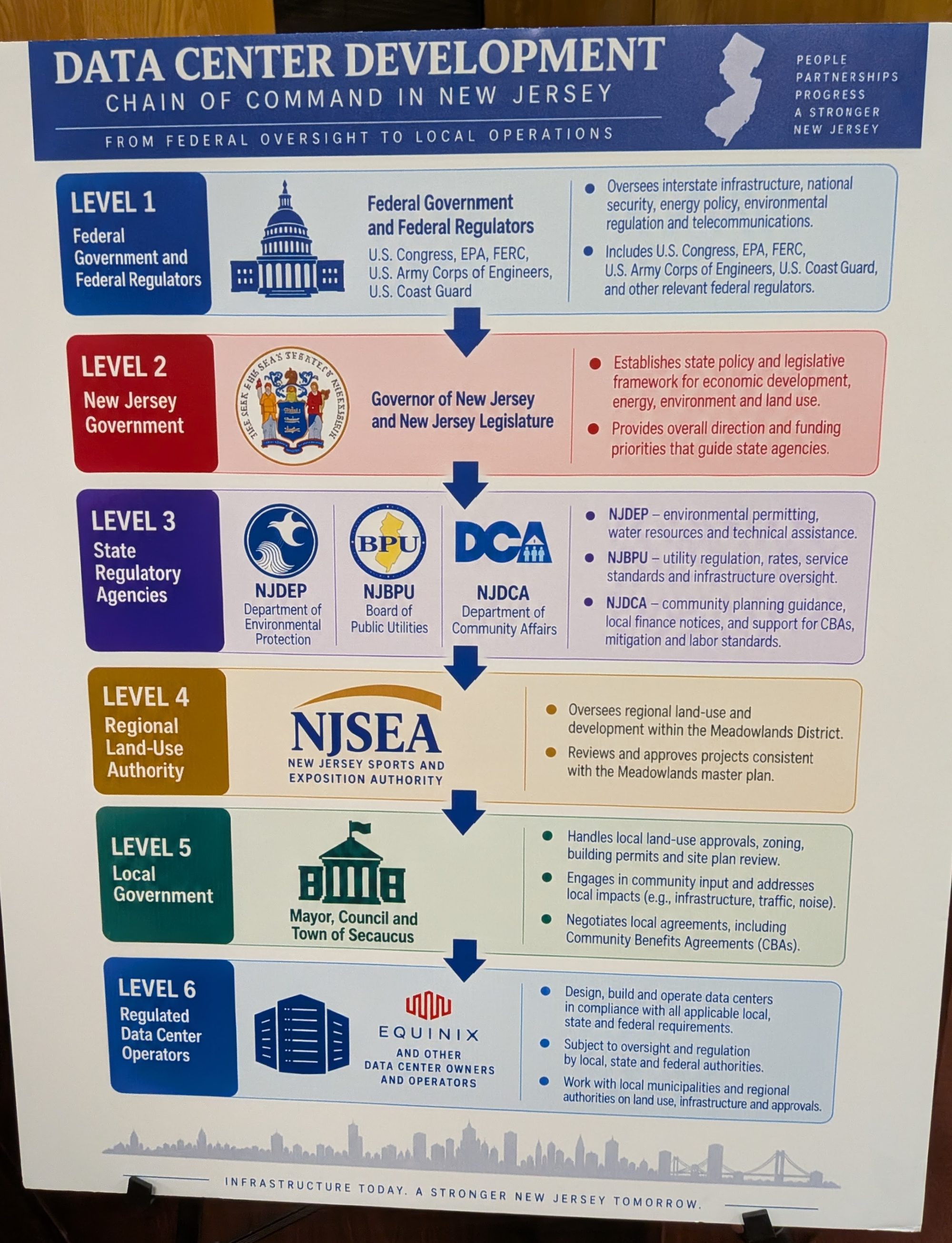
Following the creation of a specialized data center committee earlier this month, the debate over Secaucus’s digital footprint returned to Council Chambers on Tuesday. The well-attended meeting featured active dialogue between Mayor Michael Gonnelli and residents, focusing on environmental oversight after a recent industrial fuel spill and the state land-use rules governing the Meadowlands.
Environmental Spill and Water Quality
Discussion opened with sharp focus on a recent incident at the local Equinix facility, where a broken valve spilled 5,000 gallons of diesel into nearby waterways. Residents expressed skepticism over NJ Department of Environmental Protection (NJ DEP) claims of no significant ecological damage, questioning the thoroughness of ongoing cleanup efforts.
“I find it hard to believe,” one resident noted during public comment, pointing to potential long-term impacts on local wildlife and wetlands from the fuel.
Mayor Gonnelli noted that because environmental oversight falls under the NJ DEP and EPA, the town cannot mandate cleanup procedures or share unverified details. Equinix representatives attended as observers, deferring technical questions to engineering staff.
Resident David Kraatz raised broader health concerns, asking how often evaporative cooling towers are treated to prevent bacteria like Legionnaires’ and what cleaning chemicals enter municipal water treatment. Other speakers cited risks from lithium-ion backup batteries and light pollution near Shetik Field. Town officials committed to submitting these technical questions directly to facility engineers for public record.
The Zoning Tug-of-War
Central to the evening was clarifying who holds final land-use authority. Mayor Gonnelli explained that while Secaucus “opted out” of routine site plan reviews by the New Jersey Sports and Exposition Authority (NJSEA), allowing local boards to process applications, the town remains legally bound by NJSEA master zoning rules.
“We have to follow the zoning,” Gonnelli stated during the exchange. “If the data center is allowed, it’s allowed. There’s nothing I can do to stop it.”
Because NJSEA zoning permits data centers, local boards cannot reject a compliant project simply because of its end use. This setup has created a frustrating dynamic for residents, with regional regulators pointing to local review power while town leadership maintains its hands are tied by regional rules.
To define the town’s position, Town Officials distributed two informational handouts outlining the data center regulatory “chain of command” and distinguishing traditional server sites from high-density Hyperscale AI plants.
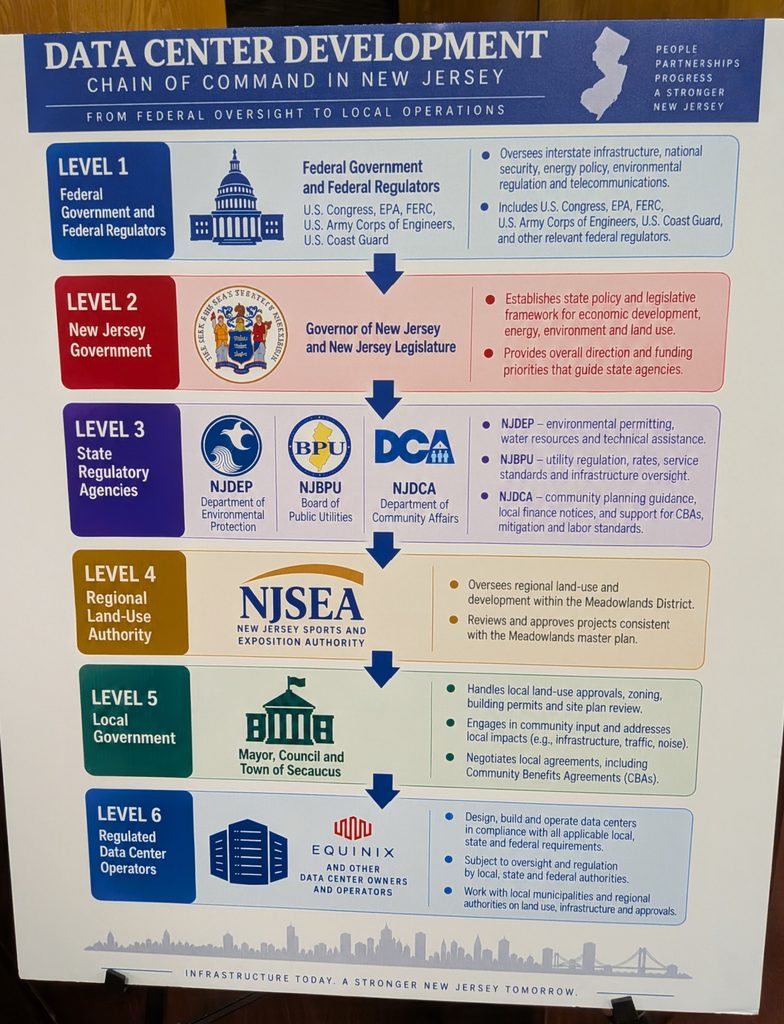
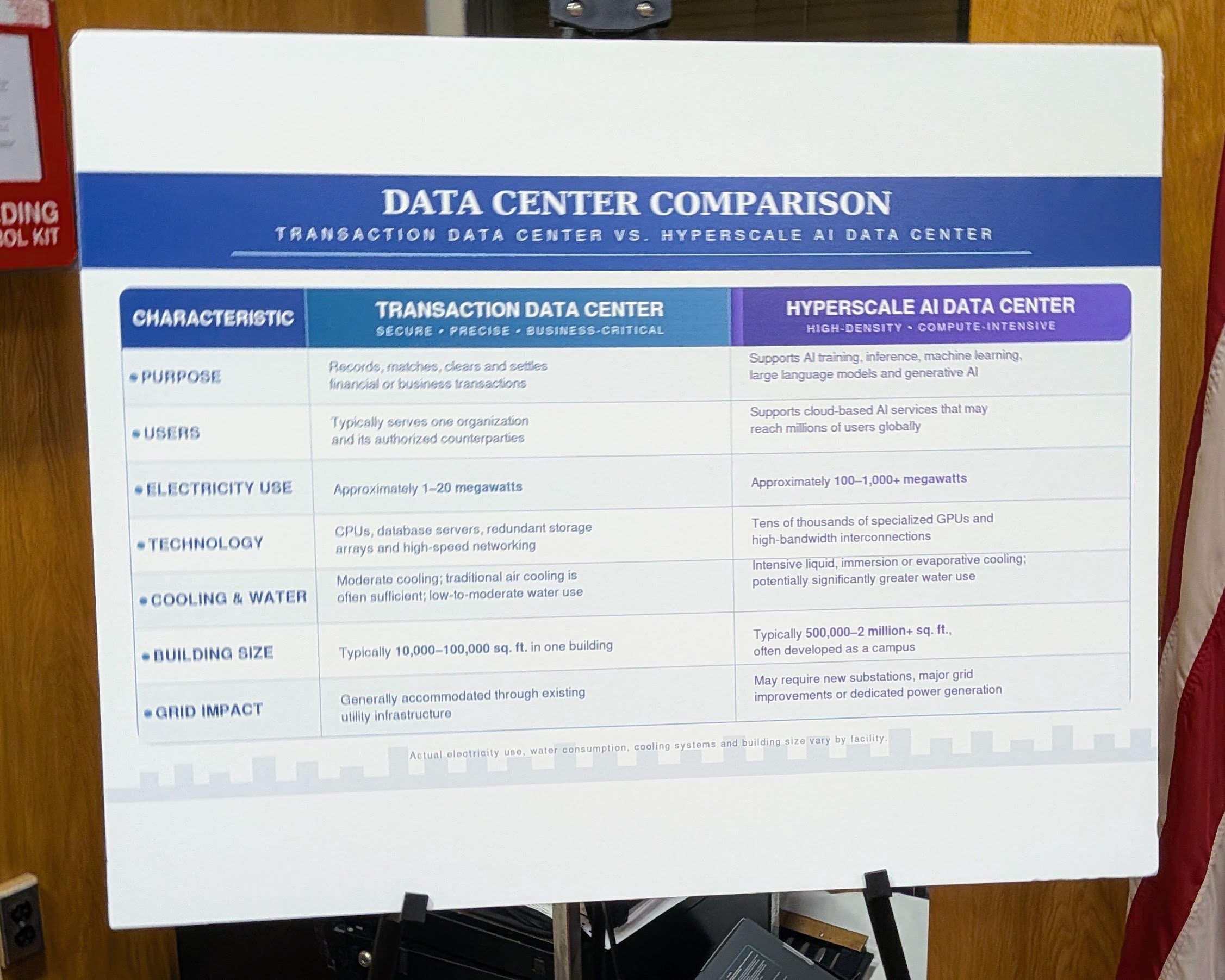
Gonnelli pledged on the record that he would not support an AI Data Center in Secaucus. Officials also re-confirmed that the Mori Tract development at 100 Paterson Plank Road remains planned as a 775,000-square-foot warehouse, not a server facility.
The municipal data center committee holds its first working session in October. Until state lawmakers or the NJSEA update regional zoning, however, Secaucus remains stuck in a familiar pattern: managing local fallout from decisions made at the regional level.
Comments are closed.